Raised Beds & Sleeper Borders in Sandiway & Davenham: Building Level Beds on Sloping & Waterlogged Ground
Planning raised beds or sleeper borders in Sandiway or Davenham? Here is how we deal with clay, slopes, drainage and fixing so they stay straight for years.

Why raised beds and sleeper borders suit Sandiway and Davenham gardens
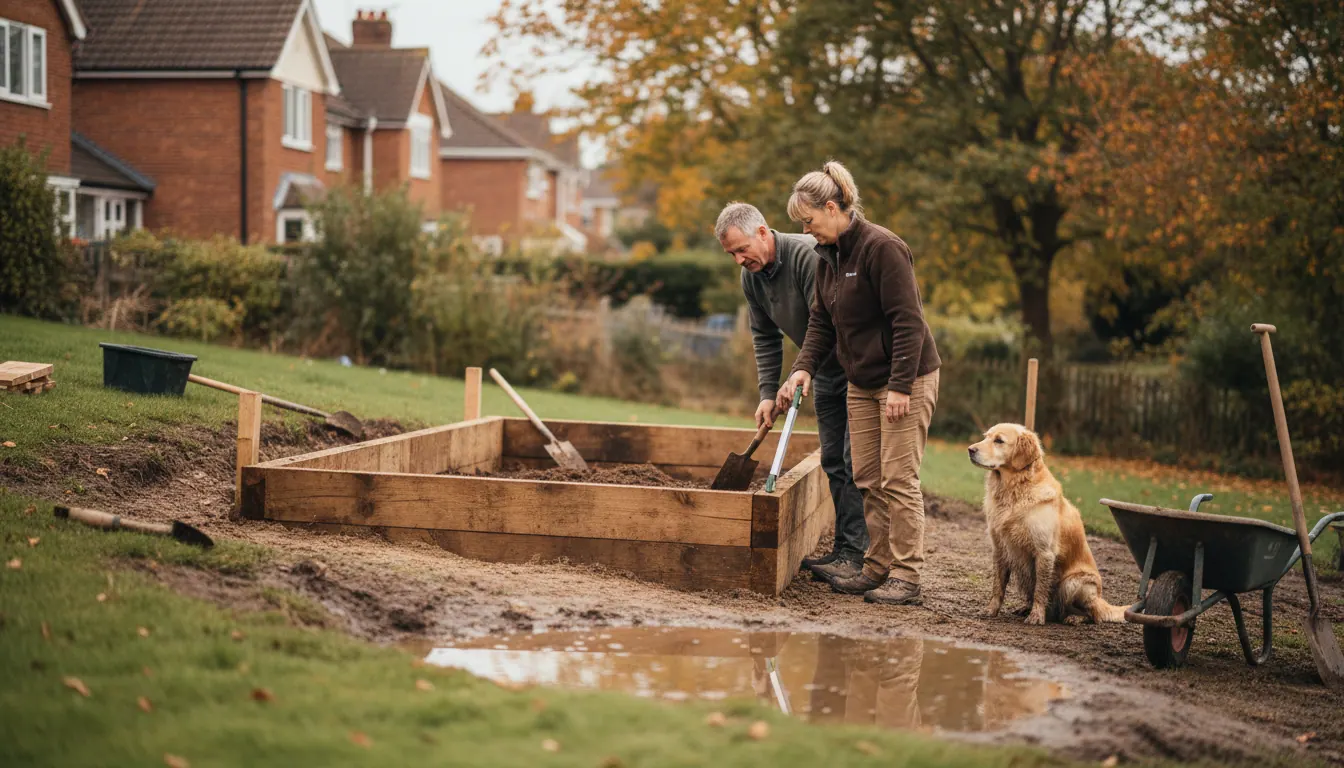
Walk round Sandiway or Davenham and you notice the gardens straight away. Plenty are generous, some slope, and many have the heavy, wet soil that Cheshire does so well. That mix is exactly why we build a lot of sleeper borders and raised beds in this part of the county.
A good sleeper border does several jobs at once. It gives a lawn a crisp edge. It holds back soil on a slope. It lifts planting out of the wettest ground. And it turns a shapeless corner into something you actually want to look at.
But a sleeper bed that looks great in week one can be leaning by the second winter if the groundwork was rushed. This guide covers what we do differently, and what to ask any joiner before you agree to a job.
Can you lay sleepers straight onto soil?
You can, and for a very low, single-height border on firm ground it sometimes works. But it is not what we would normally recommend.
Sleepers laid directly on soil tend to sit unevenly. Topsoil settles, roots shift, and water pools underneath. The bottom course is the one that decides whether the whole bed stays straight, so it needs a proper base.
What we do instead:
- Mark out the line and dig a shallow trench to firm ground, taking out turf and loose topsoil.
- Compact the base and bring it level, checking along the full length rather than at one end.
- Set the first course carefully, because every course above copies its mistakes.
- Check level again after each course as the bed goes up.
That extra half hour at the start saves a lot of regret later.
Clay soil changes the way you build
Much of our area sits on clay. It holds water in winter, shrinks in a dry summer and pushes sideways on anything holding it back. A raised bed full of wet soil is heavy, and that weight leans on the sleepers.
So we plan for two things: drainage and restraint.
Drainage. Water needs somewhere to go. Behind a retaining border we think about how the ground falls and whether water will collect at the back of the wall. A bed that cannot drain turns soggy, which is bad for plants and bad for the timber.
Restraint. Taller beds and retaining borders need to be fixed properly, not just stacked. Sleepers bow outwards when they are not secured, and the longer the run, the more obvious it gets. We fix courses together and tie them back into the ground so they act as one structure rather than a pile of heavy timber.
We go into this in more depth in our piece on raised beds and sleeper borders on clay soil.
Sloping plots: tiering rather than fighting the ground
Some gardens in Sandiway and Davenham fall away from the house, and a flat lawn is simply not on offer. Trying to force one often means a tall, bulky retaining wall. Tiering usually looks better and is easier to hold in place.
Two or three lower steps in the ground, each held by sleepers, spread the load. They also give you planting space on every level and a natural way to move through the garden. If that sounds like your plot, our guide to sleeper borders on sloping gardens explains how tiering works in practice.
What a customer said about working with us
We are a small, new business, and we would rather let a customer describe the way we work than do it ourselves. Lisa put it like this:
Polite very reliable and very good at what he does without stupid prices
Politeness and reliability sound like small things, but in garden work they matter more than people expect. You have someone in your garden, often for several days, digging, cutting and moving heavy timber. Turning up when we say, tidying as we go and explaining what is happening is as much part of the job as the carpentry.
On the subject of money, we do not give figures in articles like this. Every job is quoted individually once we have seen the space and understand what you want. Get in touch and we will talk it through.
What type of wood is best for raised beds?
Sleepers are the usual choice because they are thick, solid and look right in a Cheshire garden. For vegetable beds especially, think about what the timber has been treated with and whether you are comfortable with it near food. Ask before you buy, and ask us if you are unsure what suits your planting.
Beyond that, a few practical points:
- Thickness matters. Chunky timber resists the sideways push of wet soil far better than thin boards.
- Position matters. Beds in damp, shaded spots weather faster than those in open sun.
- Fixings matter. Good timber with poor fixings still fails.
If you want something neater and more refined than a classic sleeper look, we can build bespoke timber beds made to your dimensions, which suits smaller or more formal gardens.
Common mistakes when building raised beds
We see the same problems again and again, often on beds built over a weekend with the best of intentions.
- Skipping the base. Beds placed on uneven soil lean, and the lean gets worse.
- Building too tall for the fixings. Height multiplies the pressure from the soil. A taller bed needs stronger fixing, not just more timber.
- Ignoring drainage. Waterlogged soil is heavy, cold and unkind to roots.
- Making beds too wide. If you cannot reach the middle without stepping in, you will compact the soil you have just filled.
- Forgetting access. Leave room for a wheelbarrow and for mowing around the edges.
- Not planning the edge. A border sitting awkwardly against a lawn is a nuisance to mow. Think about where the mower will go.
Planning your border or bed before we visit
You do not need a drawing. A few thoughts help us give you a useful quote and a sensible design:
- What do you want the bed for: vegetables, flowers, shrubs, or simply tidying an edge?
- Where does the water go in winter? A photo of the garden after heavy rain tells us a lot.
- How far does the ground fall, and in which direction?
- Are there trees nearby? Roots affect both digging and the long-term stability of a border.
- How will you reach the bed for planting and maintenance?
We will look at the space, talk through options and tell you honestly if something would not work well. Sometimes a modest, low border does the job better than a big structure.
Matching borders to the rest of your garden
Sleeper beds often go in alongside other work. If the fence beside the border is tired, it makes sense to look at it at the same time, before the bed makes access awkward. Our guides to bespoke garden fencing on sloping gardens and garden screening cover that side of things.
Frequently asked questions
Can I lay sleepers straight onto soil?
You can for a low, single-course border on firm, level ground. For anything taller, or on clay or a slope, we dig a trench, compact a base and level it first. The bottom course sets the line for everything above it.
What are the most common mistakes with raised beds?
Skipping the groundwork, building too tall without proper fixing, ignoring drainage, making beds too wide to reach across and not leaving room to mow or push a barrow. Most are avoidable with a little planning.
What wood is best for raised beds?
Chunky sleepers are a popular and sturdy choice for Cheshire gardens. If you are growing food, check how the timber has been treated. We can also build bespoke timber beds to your size if sleepers feel too heavy for the space.
Do you build sleeper borders in Sandiway and Davenham?
Yes. We work across Winsford, Northwich and the villages around them, including Sandiway, Davenham, Hartford and Weaverham. Every job is quoted individually after we have seen the garden.
Talk to us about your garden
If you are thinking about raised beds, a sleeper border or tiering a sloping lawn in Sandiway, Davenham or nearby, we are happy to have a look and give you straight advice. Get in touch and tell us about the space.
Got a project in mind? Let's talk it through
Get in touch- Garden Screening & Privacy Fencing in Weaverham & Cuddington: Bespoke Timber Solutions for Overlooked Gardens
- Sleeper Borders on Sloping Gardens in Northwich & Cuddington: Tiering & Securing on Uneven Ground
- Raised Beds & Sleeper Borders on Clay Soil: Getting Them Level & Keeping Them Secure in Cheshire Gardens
- Bespoke Garden Fencing for Sloping Gardens in Winsford & Northwich: How to Get Level Posts on Uneven Ground