Raised Beds & Sleeper Borders on Clay Soil: Getting Them Level & Keeping Them Secure in Cheshire Gardens
Sleeper borders on clay soil in Cheshire need the right approach to last. Here's how we install them across Winsford, Northwich and the surrounding villages.

Why Clay Soil Makes Sleeper Borders a Different Job
Clay soil covers a large part of mid-Cheshire. If you live in Winsford, Northwich, Cuddington, Sandiway or any of the villages in between, there is a reasonable chance you are gardening on it. It holds water, swells when wet, shrinks when dry, and moves with the seasons. That movement is exactly what causes sleeper borders to fail before their time.
Most articles about garden sleepers are written as if all soil is the same. It is not. What works on free-draining sandy ground in another part of the country needs adapting here. This is what we have learned installing sleeper borders across the Cheshire plain, and it is why the preparation matters just as much as the timber itself.
Can You Put Sleepers Directly on Clay Soil?
The short answer is yes, but with conditions.
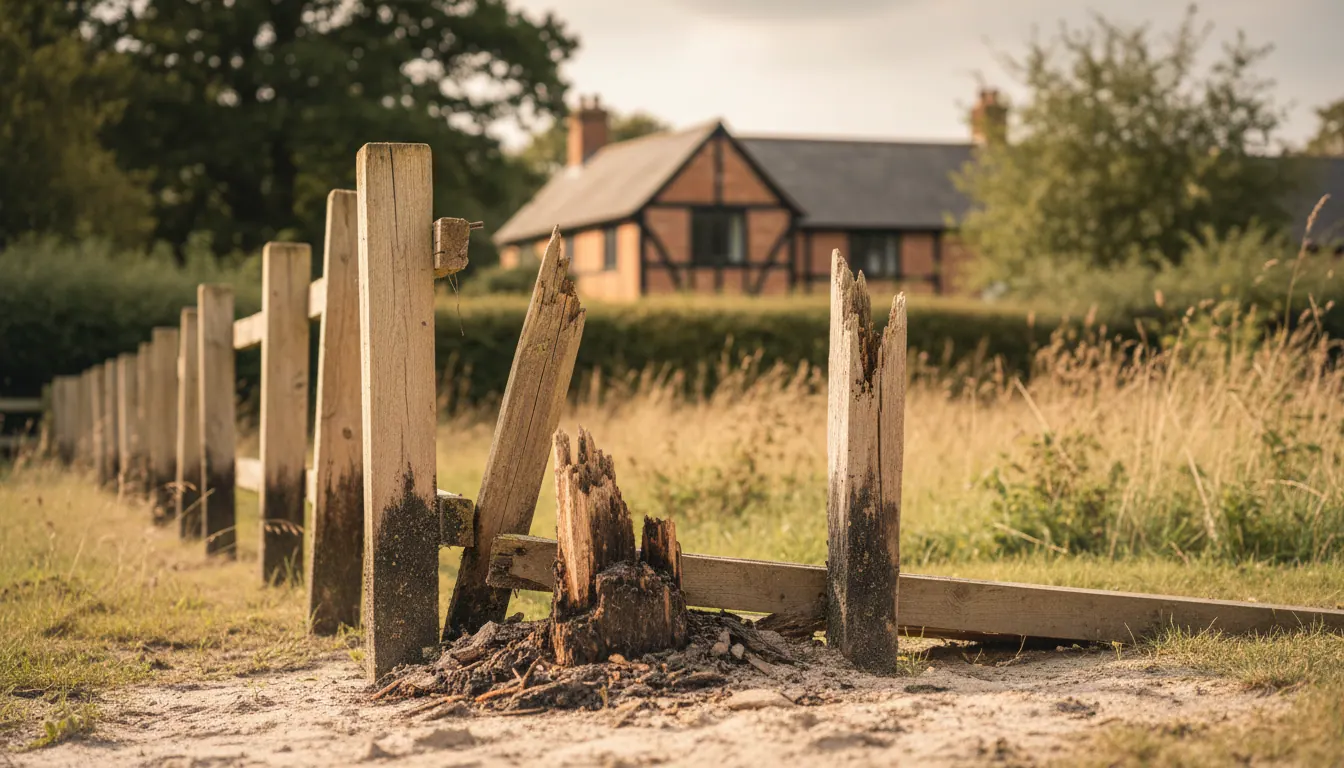
Laying sleepers flat onto bare clay without any preparation is the most common mistake. The clay sits wet through winter, the base of the timber stays permanently damp, and rot sets in from the bottom up. You may not notice for a year or two, but the damage is happening from day one.
What we do instead:
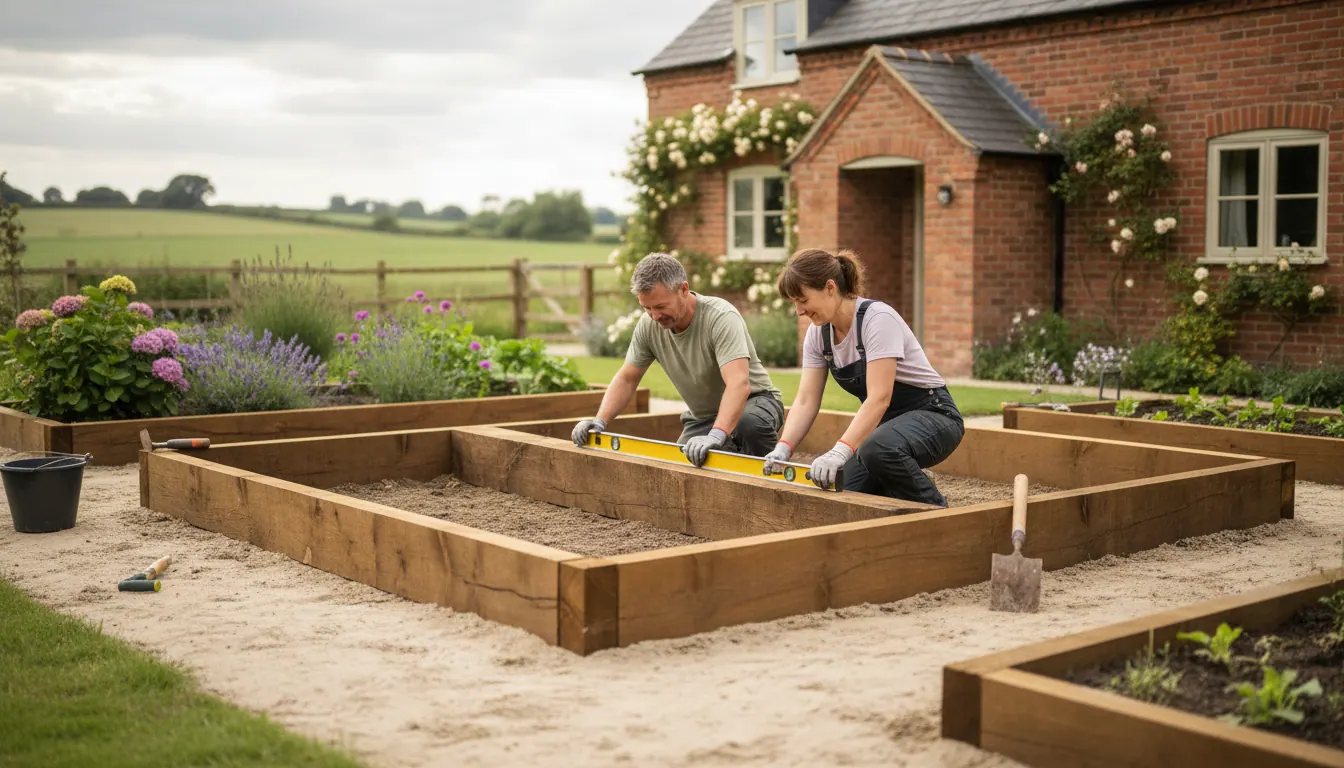
- Excavate a shallow bed beneath each sleeper run, typically 50 to 75 mm deep
- Lay a compacted hardcore or gravel base to lift the timber away from direct contact with saturated clay
- Use a membrane beneath the gravel where the ground is particularly heavy or poorly drained
- Allow drainage gaps at intervals along the border so water does not pond behind the sleepers
This does not have to be a major groundworks operation. For a simple raised border or garden edging job, the preparation adds perhaps a morning's work. But it is the difference between a border that looks good in five years and one that is already rocking and rotting.
Holding Back Soil on a Slope: Where Sleepers Really Earn Their Keep
Sloping gardens are common across Winsford and the villages north and west of Northwich. Weaverham, Barnton, Cuddington and Rudheath all have plenty of gardens that drop away from the house, sometimes quite steeply.
Clay on a slope is not just a drainage problem. It is a pressure problem. When saturated clay sits behind a sleeper wall, it becomes heavy. A border that is holding back a significant depth of soil needs to be built to resist that lateral pressure, not just look tidy.
For anything more than a single-sleeper edge (say, a border retaining 150 mm of soil), we use vertical stakes or timber posts driven into the ground behind the sleepers. These pins transfer the load downward rather than letting the sleepers flex outward. Without them, even heavy oak sleepers will bow over time.
For tiered gardens with multiple levels, we plan each tier separately, making sure water drains away from the face of each sleeper run rather than building up behind it. On a Cheshire clay garden in winter, that drainage detail is not optional.
If you are thinking about a sloping garden project, our article on bespoke garden fencing for sloping gardens in Winsford and Northwich covers some of the same ground-level challenges from a different angle.
Choosing the Right Sleeper for Clay Soil in Cheshire
Not all sleepers are equal, and the choice matters more on clay than on other soil types.
New softwood treated sleepers are the most common and the most affordable. They are pressure-treated with preservative, which helps, but the treatment only penetrates the outer layers of the timber. If the surface gets damaged or cut during installation, the untreated core is exposed. On clay, where moisture is persistent, that matters.
Hardwood oak sleepers are denser, hold their shape better under lateral pressure, and are more resistant to ground contact moisture. They are heavier to work with and the initial outlay is higher, but for a border that is doing real structural work on a sloping clay garden, oak is the better long-term choice.
Reclaimed railway sleepers are popular for their look. The old-style ones were treated with creosote, which is genuinely effective against rot. However, creosote is restricted for domestic use in the UK now, and truly creosote-treated sleepers are harder to source legitimately. Many reclaimed sleepers sold today are not the old-style treated ones, so check before assuming they will last like the originals.
For most domestic borders in Winsford, Northwich and the surrounding villages, we tend to recommend either good-quality treated softwood for simple edging or oak for anything structural. We will tell you honestly which we think suits the job when we come to look at it.
Fixing Sleepers So They Stay Put on Clay
Clay moves. Timber moves. The fixing method has to accommodate both.
For single-course edging (one sleeper high, used to define a border), long rebar pins driven vertically through pre-drilled holes into the ground below are a clean and effective solution. The rebar goes through the sleeper and into the soil beneath, holding it in place without visible fixings.
For stacked sleepers (two or three courses high), we use a combination of rebar pins and coach screws or bolts between courses. The courses are staggered like brickwork so there is no continuous vertical joint. This distributes movement and means that if one sleeper shifts slightly, it does not pull the whole run with it.
One thing to avoid on clay: relying on weight alone. Sleepers are heavy, and it is tempting to assume they will just sit there. On stable ground that might be true. On Cheshire clay that freezes, thaws and moves through the year, weight alone is not enough.
Planting Into Clay Soil Behind Sleeper Borders
Once the border is built, the soil behind it is still clay. That is not necessarily a problem, but it does shape what you plant and how you prepare the bed.
Clay soil is actually fertile. It holds nutrients well. The issue is drainage and workability. For a raised sleeper border, the simplest approach is to mix the existing clay with grit, compost and topsoil to improve the structure before planting. You do not need to import entirely new soil for most planting schemes.
For ground cover on slopes in a UK climate, plants that establish quickly and spread without needing perfect drainage tend to work well. Hardy geraniums, ajuga, vinca and low-growing sedums all cope with clay. Ornamental grasses can work well too, and their root systems help bind the soil on a slope.
What to avoid directly behind a new sleeper border: anything with very aggressive roots (bamboo is the obvious example) that will push against the timber over time.
We install the borders. What you plant is your call. But if you ask, we are happy to share what we have seen work in Cheshire gardens.
What Lisa Said
One thing we hear from customers regularly is that they want a job done properly, without being overcharged or messed about. Lisa Brookes, one of our customers, put it simply:
Polite very reliable and very good at what he does without stupid prices
That is what we aim for on every job. Turn up when we say we will, do the work properly, and be straightforward about what is needed and what is not.
Garden Structures That Work Alongside Sleeper Borders
Sleeper borders rarely stand alone. They often come alongside other garden work: a pergola, some screening, raised beds, or a bin store tucked into a corner. If you are already having borders installed, it usually makes sense to plan the wider garden layout at the same time rather than coming back to it piecemeal.
Our article on garden structures in Cheshire, including pergolas, screening and bin stores, covers the kind of bespoke timber work we do alongside borders and raised beds.
Frequently Asked Questions
Can I put sleepers directly on soil without any base preparation? Technically yes, but on Cheshire clay we would not recommend it. Clay holds moisture against the base of the timber and accelerates rot. Even a simple compacted gravel base, 50 to 75 mm deep, makes a significant difference to how long the sleepers last. We always include some form of base preparation as part of the installation.
What is the best way to hold back soil on a sloping garden? For modest slopes, a single course of sleepers pinned with rebar is often enough. For steeper gardens or anywhere you are retaining more than 200 mm of soil, stacked sleepers fixed with coach screws and supported by timber posts or rebar pins behind them are the more reliable solution. The key on clay is also to allow drainage behind the wall so water pressure does not build up.
Can I plant straight into clay soil once the border is built? Yes, though it is worth improving the soil structure first. Digging in grit and compost before planting opens up the clay, improves drainage and makes it easier for roots to establish. Clay is actually nutrient-rich, so once you have sorted the drainage side, it can be a good growing medium.
What ground cover plants work on a slope in a UK garden? Hardy geraniums, ajuga reptans, vinca minor and low ornamental grasses all establish well on slopes in a UK climate and tolerate heavier soils. They spread to cover ground reasonably quickly and their root systems help hold the soil in place. Avoid anything with very aggressive spreading roots close to timber structures.
Get in Touch
If you have a sloping garden, heavy clay soil, or a border project that needs thinking through properly, we are happy to come and take a look. We cover Winsford, Northwich, Hartford, Davenham, Sandiway, Weaverham, Cuddington, Moulton, Barnton, Rudheath, Middlewich and the surrounding area. Get in touch with us and we will arrange a time to visit.