Carpenter vs Joiner: What's the Difference & Which One Do You Need in Winsford?
Carpenter vs joiner difference explained for Cheshire homeowners. Find out which trade you actually need for your project in Winsford, Northwich and beyond.

Two trades, one question that trips people up
Most people use the words interchangeably. "I need a joiner" or "I need a carpenter" often means the same thing in everyday conversation, and most tradespeople in Cheshire will understand what you mean either way. But the distinction is real, it matters when you are scoping a job, and knowing it helps you ask better questions before anyone picks up a tool.
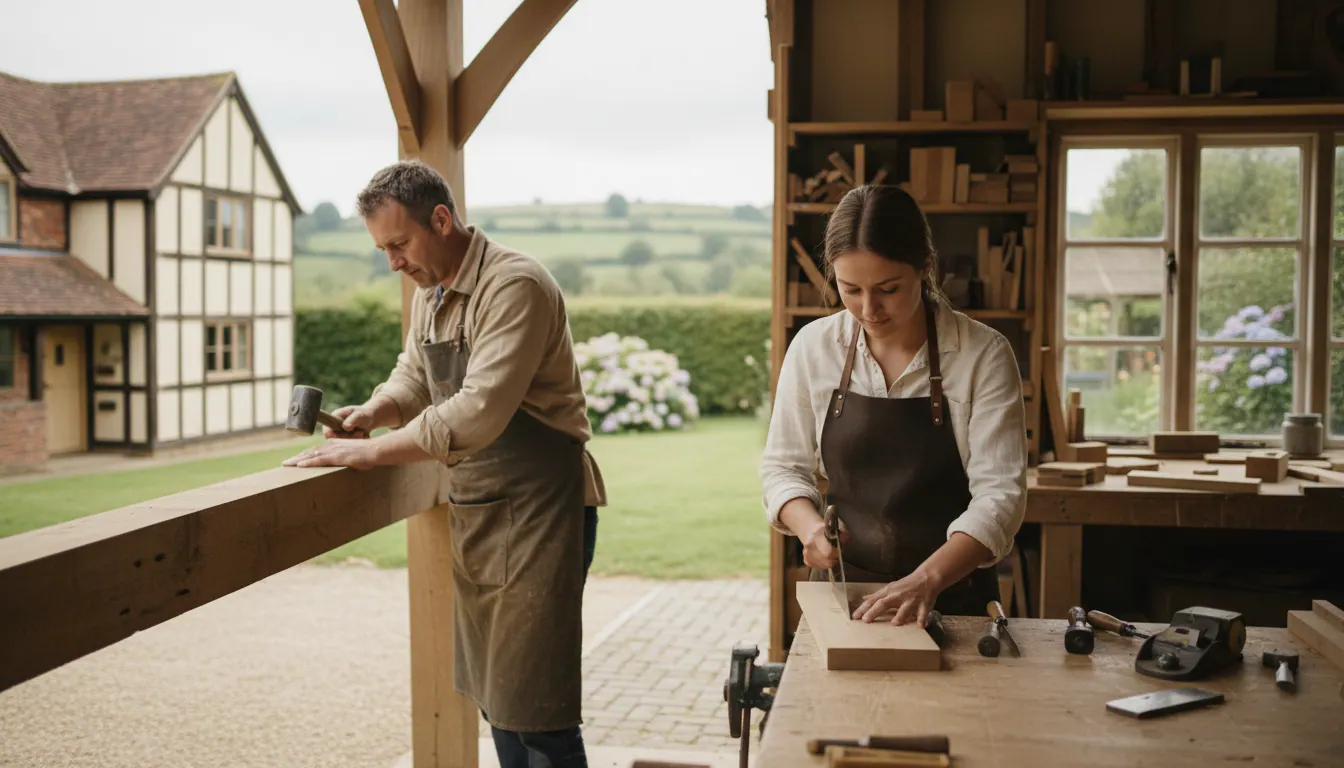
Here is the plain version: joinery is mostly about making things, and carpentry is mostly about fitting them. That is the traditional split, anyway. In practice, most skilled tradespeople in Winsford and Northwich do both, and the line between the two blurs constantly on real jobs.
What a joiner actually does
A joiner works with timber to create components, usually in a workshop or on a bench. The word comes from "joining" pieces of wood together: cutting joints, shaping profiles, assembling frames. Traditional joinery involves mortise and tenon joints, dovetails, housing joints and similar techniques that hold timber together without relying entirely on screws and adhesive.
Think of the things a joiner makes:
- Fitted wardrobes and alcove units built to the exact dimensions of a room
- Staircases, handrails and balustrades
- Bespoke doors, window frames and sash windows
- Made-to-measure shelving and storage
- Timber gates, pergolas and garden structures
The key word is made. A joiner starts with timber and produces something that did not exist before. The skill is in the precision of the making, the quality of the joints, and the way the finished piece fits the space it was designed for.
What a carpenter does
Carpentry is the site-based trade. A carpenter takes materials, often things someone else has made, and installs or constructs them in position. First-fix carpentry happens early in a build: stud walls, floor joists, roof timbers. Second-fix carpentry comes later: hanging doors, fitting skirting boards and architraves, installing stairs, fixing window boards.
A carpenter needs to read a space accurately, work around other trades and make things sit true and level in buildings that are rarely square. That last point matters enormously in older Cheshire homes, where walls move, floors settle and nothing is ever quite plumb.
Where the two trades overlap (which is most of the time)
In the UK, particularly in towns like Winsford, Northwich, Davenham and Weaverham, most people working in timber do both. A tradesperson who makes a fitted alcove unit also fits it. Someone who builds a timber gate also hangs it on its posts. The split between "maker" and "fitter" is a useful conceptual tool, but it rarely describes what actually happens on a job.
When you see the phrase "carpenter and joiner" on a van or a website, that is what it means: someone who does the full run from making to fitting. Apprenticeships in the UK often cover both, and the City and Guilds qualification that most people study is formally titled "Carpentry and Joinery."
So if you are trying to decide whether to search for a joiner or a carpenter in Northwich, the honest answer is: either will usually get you to the right person. What matters more is whether they do the specific type of work you need.
Is a joiner the same as a chippy?
Yes, broadly. "Chippy" is the informal term for anyone working in timber, whether they call themselves a carpenter, a joiner or both. It comes from the wood chips produced when cutting and shaping timber. You will hear it used across Cheshire and the rest of the UK without any meaningful distinction. If someone says "I'll get my chippy to look at it," they mean a carpenter or joiner.
Which is more skilled, a carpenter or a joiner?
This question comes up a lot, and the honest answer is that they are different skills, not a hierarchy. Traditional bench joinery, the kind that involves hand-cut dovetails and complex frame-and-panel construction, demands a high level of precision and takes years to develop. But fitting work on site, particularly in older properties with uneven floors and out-of-square walls, requires a completely different kind of problem-solving that is no less demanding.
In a house in Hartford or Cuddington built in the 1930s, hanging a door that actually closes properly, seals against draughts and sits flush in a frame that has moved over the decades is genuinely skilled work. It looks simple from the outside. It is not. The same applies to fitting a run of alcove shelving in a Victorian terrace in Winsford where the chimney breast is not symmetrical and the ceiling dips by 30mm across the width of the room.
If you want to understand more about what that fitting work actually involves on older properties, our article on internal doors and door hanging in Winsford goes into the detail.
What does this mean for your project?
The practical question is not "joiner or carpenter?" It is "does this person do the type of work I need?" Here are the most common jobs homeowners in and around Winsford and Northwich ask about, and where they sit on the spectrum:
Bespoke fitted storage (wardrobes, alcove units, shelving) This is joinery work: measuring, making and fitting to the space. Off-the-shelf units from a builders' merchant will not fit an alcove properly because alcoves are almost never square or symmetrical. Made-to-measure is the only reliable solution. We cover this in detail in our article on alcove units in Winsford and Northwich.
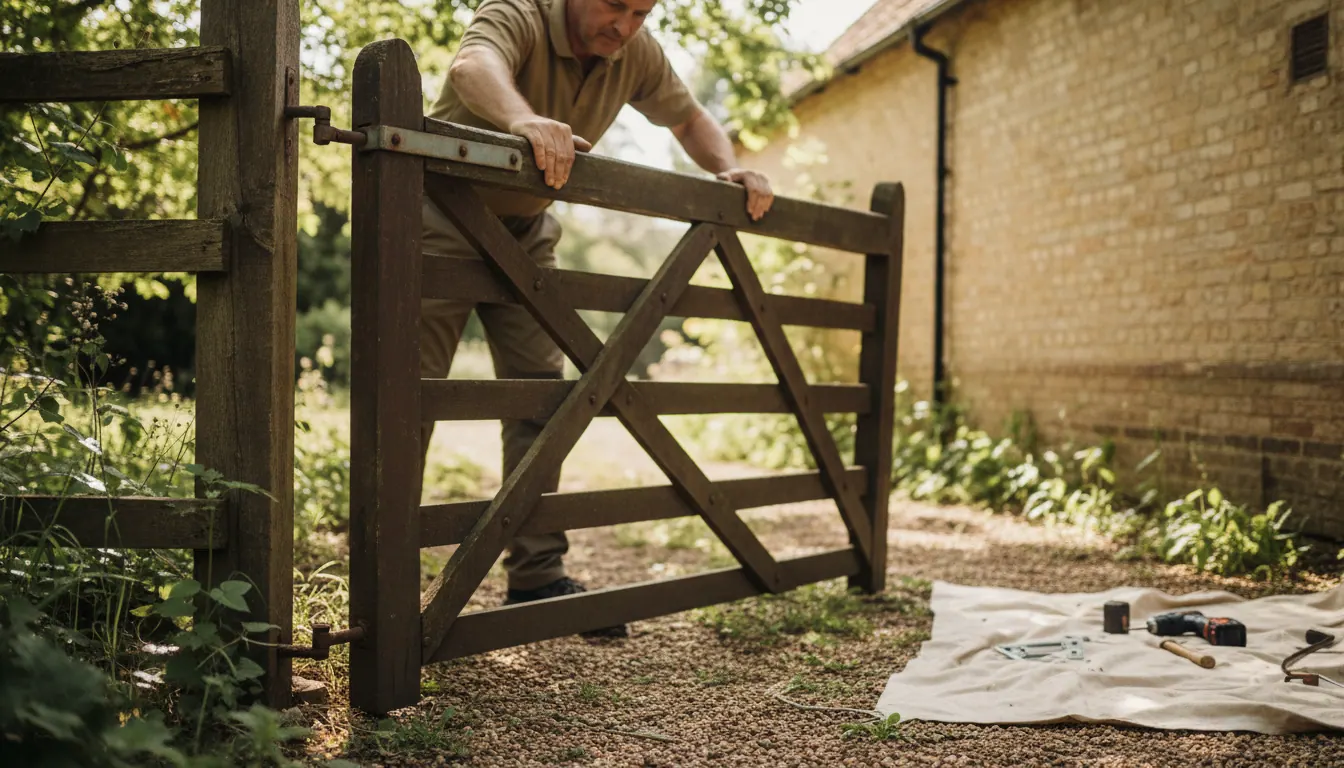
Fencing, gates and garden structures This sits across both trades. Making a bespoke timber gate is joinery. Setting posts in concrete, hanging panels and fitting gravel boards is carpentry. Most fencing contractors do the whole job.
Door hanging and second-fix work Carpentry. But in period properties, the joinery element creeps in because doors often need planing, rebating or new stops to fit properly.
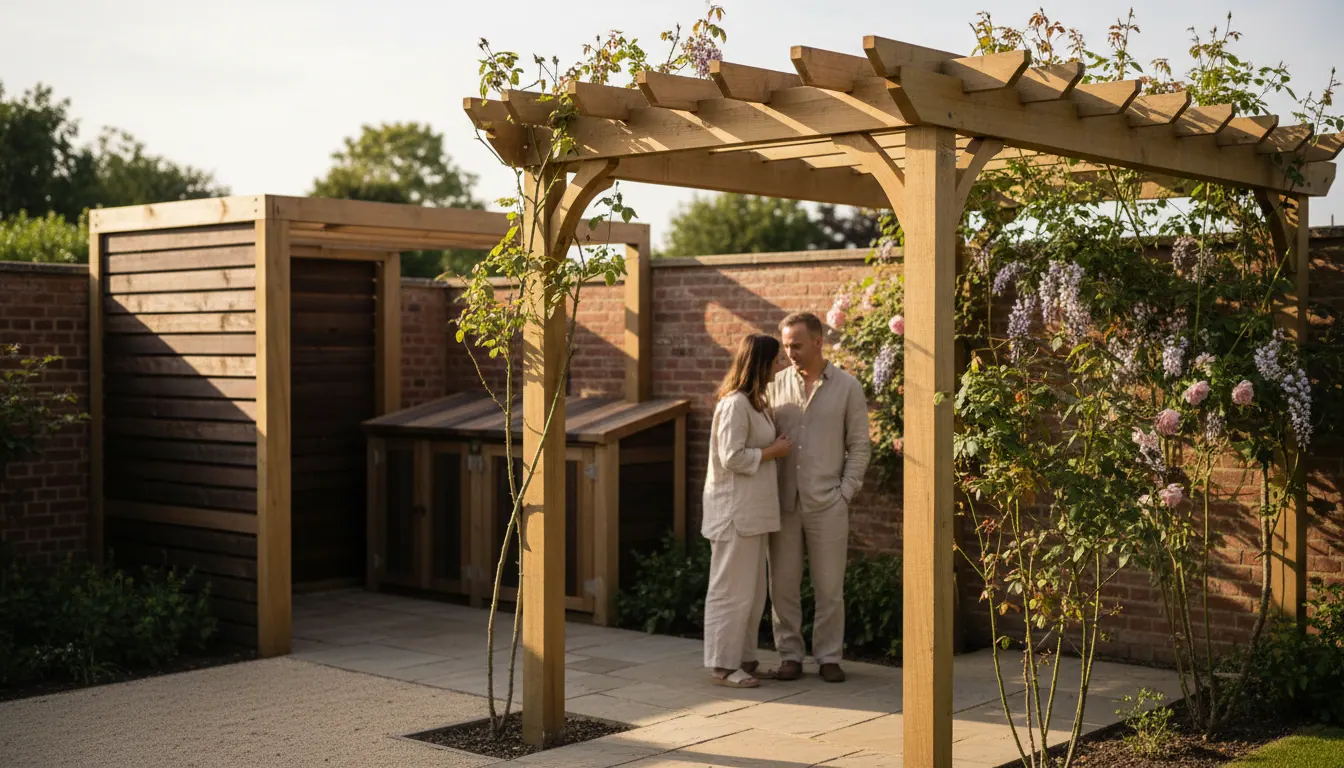
Pergolas, raised beds and sleeper borders Garden structures involve both making and fitting. A pergola needs accurately cut joints and well-set posts. Sleeper borders need to be properly pinned and levelled or they will bow and shift over time.
What our customers actually say
One of our customers, Lisa, put it simply:
Polite very reliable and very good at what he does without stupid prices
That phrase "very good at what he does" is the thing we hear most often matters to people. Not the label on the trade, but the quality of the outcome. A fitted wardrobe that sits perfectly in a room, a gate that swings true, a run of shelving that looks as though it was always there. That is what the distinction between carpentry and joinery ultimately serves: it describes the skills behind work that is done properly.
A note on cabinet makers
You may also come across the term "cabinet maker," particularly if you are looking at high-end bespoke furniture. A cabinet maker is essentially a specialist joiner who focuses on fine furniture and cabinetry. The standard of finish tends to be very high, and the work is usually entirely bench-based. If you need a fitted kitchen or a one-off piece of furniture made to a very precise brief, a cabinet maker is the right search term. For most fitted storage, fencing and general joinery work in Winsford, Northwich and the surrounding villages, a carpenter and joiner covers everything you need.
Frequently asked questions
Are carpentry and joinery the same thing? They are closely related but technically different. Joinery refers to making timber components (wardrobes, doors, frames, gates) with precise joints and shaping. Carpentry refers to the site-based work of fitting and constructing in position. In practice, most tradespeople in the UK do both, and the terms are often used interchangeably.
What is better, a joiner or a carpenter? Neither is "better." They are complementary skills. For a bespoke fitted wardrobe or an alcove unit, you want someone with joinery skills. For hanging a door or fixing skirting, you want carpentry skills. Most good tradespeople in Cheshire offer both, so the more useful question is whether they have done the specific type of job you need before.
Is a joiner a chippy? Yes. "Chippy" is the informal term used across the UK for anyone working in timber, whether they call themselves a carpenter, a joiner or both. It is not a formal qualification, just a common trade nickname.
Do I need a joiner or a carpenter for fitted wardrobes or alcove shelving? You need someone with joinery skills: the ability to measure accurately, cut components to fit a specific space and assemble them so the finished piece sits true. In a house in Winsford, Northwich, Sandiway or any of the surrounding villages, walls are rarely straight and rooms are rarely square, so made-to-measure work is almost always necessary. A carpenter and joiner who does fitted storage regularly will handle the whole job from measuring to fitting.
Ready to talk through your project?
If you have a job in mind, whether it is fitted storage, fencing, a timber gate or a garden structure, we are happy to come and look at the space and give you a clear idea of what is involved. We cover Winsford, Northwich and the surrounding villages including Hartford, Davenham, Sandiway, Weaverham, Cuddington, Moulton, Barnton, Rudheath and Middlewich.
Get in touch with us and we will take it from there.