Gravel Boards & Fence Bases in Winsford: Why They Rot First & When to Replace Them
Gravel board fence repair in Winsford and across Northwich, Cheshire. We explain what fails, when to repair vs replace, and how to get a quote.

Gravel boards take the punishment so your fence panels don't have to
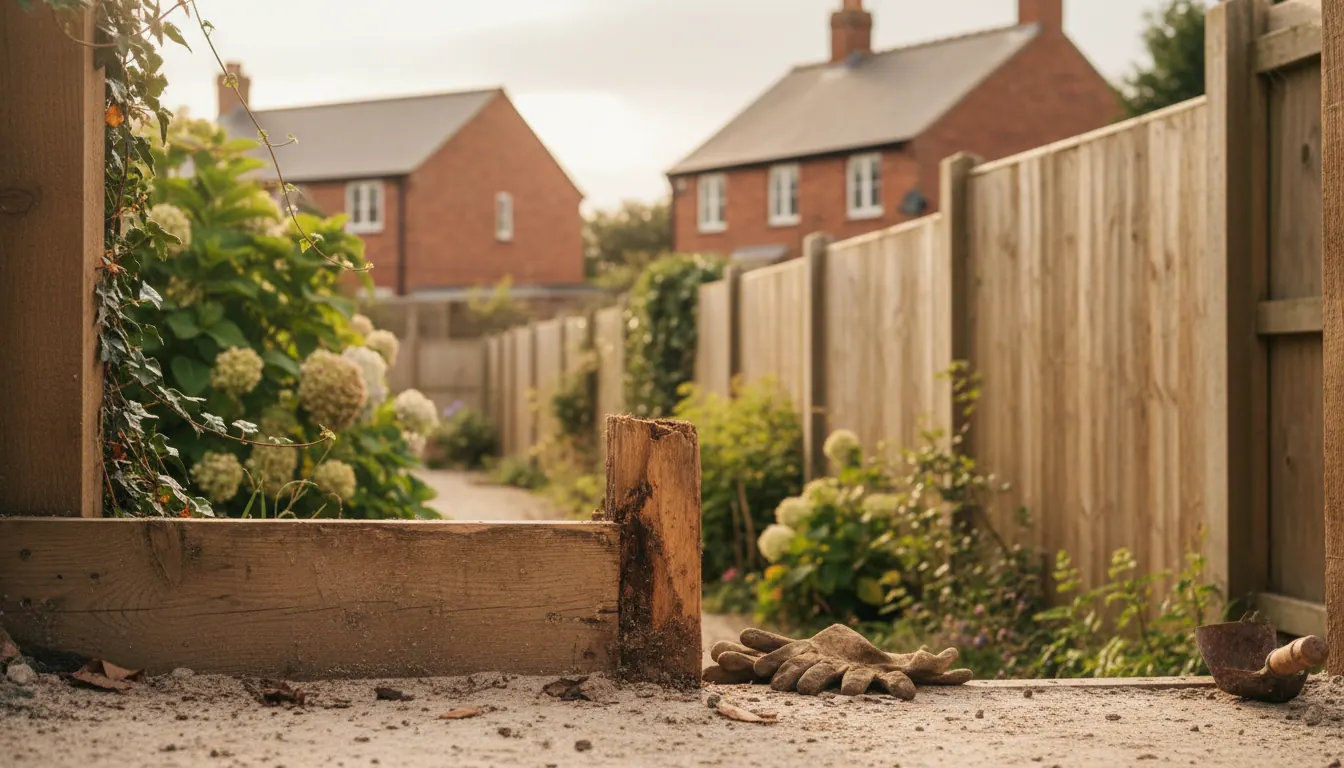
That strip of timber or concrete running along the bottom of your fence is easy to overlook. It sits close to the ground, it gets buried under leaf litter in autumn, and it rarely gets a second glance until something goes wrong. But the gravel board is doing a critical job: it keeps your fence panels lifted clear of soil, standing water and rotting vegetation. When it fails, the damage moves upward fast.
We repair and replace gravel boards for homeowners across Winsford, Northwich, Hartford, Davenham, Sandiway, Weaverham, Cuddington, Moulton, Barnton, Rudheath and Middlewich. This article explains what actually causes gravel boards to fail, what we look for when we assess a fence, and when a targeted repair is the smarter call over a full replacement.
Why gravel boards fail in Cheshire gardens
The short answer is moisture. Cheshire winters are wet, and clay-heavy soil in much of the area holds water rather than draining it away. A timber gravel board sitting in contact with damp ground will absorb moisture from both directions: rain from above and ground water from below. Over time, the wood softens, splits and rots from the bottom edge upward.
Concrete gravel boards last longer than timber ones in these conditions. They don't absorb water in the same way, and they won't rot. But concrete isn't indestructible. It can crack under pressure, especially if the ground shifts or a post moves. A cracked concrete gravel board no longer seals the gap properly, which means soil and water start getting through to the base of your fence panels.
Common causes of gravel board failure we see across Winsford and the surrounding villages:
- Ground movement. Frost heave in winter and dry spells in summer cause soil to expand and contract. Posts shift, gravel boards crack or lift.
- Rotten timber posts. When a post rots at its base, it can lean and put lateral stress on the gravel board, cracking or dislodging it. The gravel board itself may look fine until you check the post it's slotted into.
- Vegetation growth. Ivy, grass and weeds pushing up behind or beneath a gravel board speed up moisture retention and physical damage.
- Age. A timber gravel board on a fence that's more than ten years old is likely near the end of its life regardless of how well it was installed.
Concrete gravel board repair: what it actually involves
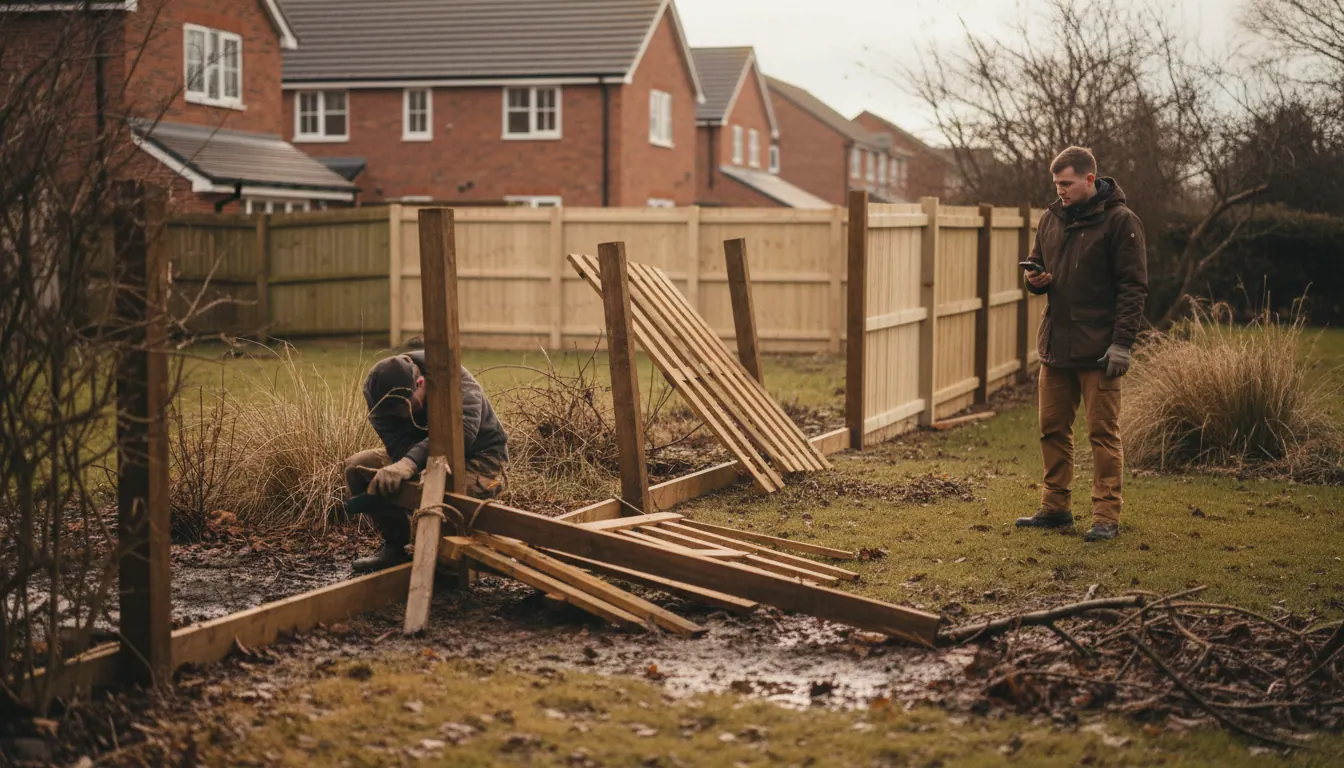
Repairing or replacing a concrete gravel board is a more involved job than it might look from the garden side. The board typically slots into grooves in concrete or timber posts. To remove a damaged board, you often have to lift fence panels out of the way, slide the gravel board free, and then fit the new one back in without disturbing the posts or the panels above.
If the posts are concrete, this is usually straightforward enough. If the posts are timber and have started to soften at ground level, that changes the picture. A rotten timber post won't grip the replacement gravel board properly, and fitting a new board into a failing post is a short-term fix at best. In those cases, we'll tell you honestly that the post needs to come out too.
We always check the posts and the base of the panels before we quote. There's no point replacing a gravel board and leaving a problem that will resurface in six months.
For more on spotting post decay before it causes a full fence failure, our article on rotten fence posts in Winsford and Middlewich covers the warning signs in detail.
When a repair is the right call, and when it isn't
Not every damaged gravel board means a new fence. A targeted repair, replacing one or two boards and checking the posts they sit in, can add years to a fence that's otherwise sound. We're happy to take on single-section jobs. There's no minimum run length.
A repair makes sense when:
- The posts are solid and upright, with no visible softening or movement at ground level
- The fence panels above are in good condition
- Only one or two gravel boards are damaged or missing
- The fence is relatively new or was well-built originally
Replacement becomes the better option when:
- Multiple posts are rotten or leaning
- Panels are warped, broken or holding moisture throughout
- The fence is more than fifteen years old and showing widespread decay
- A repair would cost more than half the price of a new run
If you're unsure which situation you're in, the honest answer is: get someone to look at it properly. We can assess the whole fence, not just the bit that's obviously broken, and give you a clear picture of what's worth fixing and what isn't.
Our article on fence repairs versus replacement in Winsford goes into this in more detail if you want to think it through before calling.
What a gravel board repair visit looks like
We'll come out, look at the fence from both sides where possible, and check the posts, panels and gravel boards together as a system. Fences fail as a system, not in isolation. A cracked gravel board is often a symptom of something else: a leaning post, a panel that's been holding water, or a section where the original installation wasn't quite right.
Once we understand what's needed, we'll give you a clear quote. Every job is priced individually because no two fences are the same, and no two gardens in Winsford or Northwich are laid out the same way either. We don't quote blind.
What Lisa told us
One of our customers summed up what matters to most homeowners in a straightforward way:
"Polite very reliable and very good at what he does without stupid prices" , Lisa Brookes
That's the standard we aim for on every job, whether it's a single gravel board in Moulton or a full fence run in Weaverham. Turn up when we say we will, do the job properly, and be straight about what it costs.
Frequently asked questions
Can you repair just one or two gravel boards, or do you replace the whole fence? We can absolutely repair individual sections. If only one or two gravel boards are damaged and the posts are sound, there's no reason to replace the whole fence. We assess each job on its merits and only recommend wider work if the inspection shows it's genuinely needed.
What's the difference between a concrete gravel board and a timber one? Concrete gravel boards are more durable in wet conditions and don't rot. They're a sensible choice for Cheshire gardens where the ground stays damp through autumn and winter. Timber gravel boards are lighter and easier to work with, but they need to be pressure-treated to last, and they'll still have a shorter lifespan than concrete in exposed or wet positions. We'll advise on which is the better fit for your fence when we come out.
My fence post is leaning. Does that mean the gravel board has failed? Not necessarily, but a leaning post and a damaged gravel board often go together. When a post starts to move, it can crack or dislodge the gravel board slotted into it. It can also mean the post itself is rotting at ground level. We check the posts as part of every gravel board repair assessment, because fixing the board without addressing a failing post won't hold for long.
Do you cover villages outside Winsford and Northwich? Yes. We work across the wider area including Hartford, Davenham, Sandiway, Weaverham, Cuddington, Moulton, Barnton, Rudheath and Middlewich. If you're in Cheshire and within reasonable reach of Winsford or Northwich, get in touch and we'll let you know.
Get a proper look at your fence before the weather turns
Autumn and winter are when fence damage tends to become obvious, but the underlying problems usually started months earlier. A gravel board that cracked in last winter's frost, a post that softened quietly over summer, a panel that's been holding water since spring. By the time you notice it, the damage has often spread further than it looks.
If your gravel boards are cracked, missing or letting soil through to the base of your panels, it's worth getting it looked at sooner rather than later. We cover Winsford, Northwich and all the surrounding villages, and we're straightforward about what needs doing and what doesn't.
Get in touch with us to arrange a visit and a no-nonsense quote.