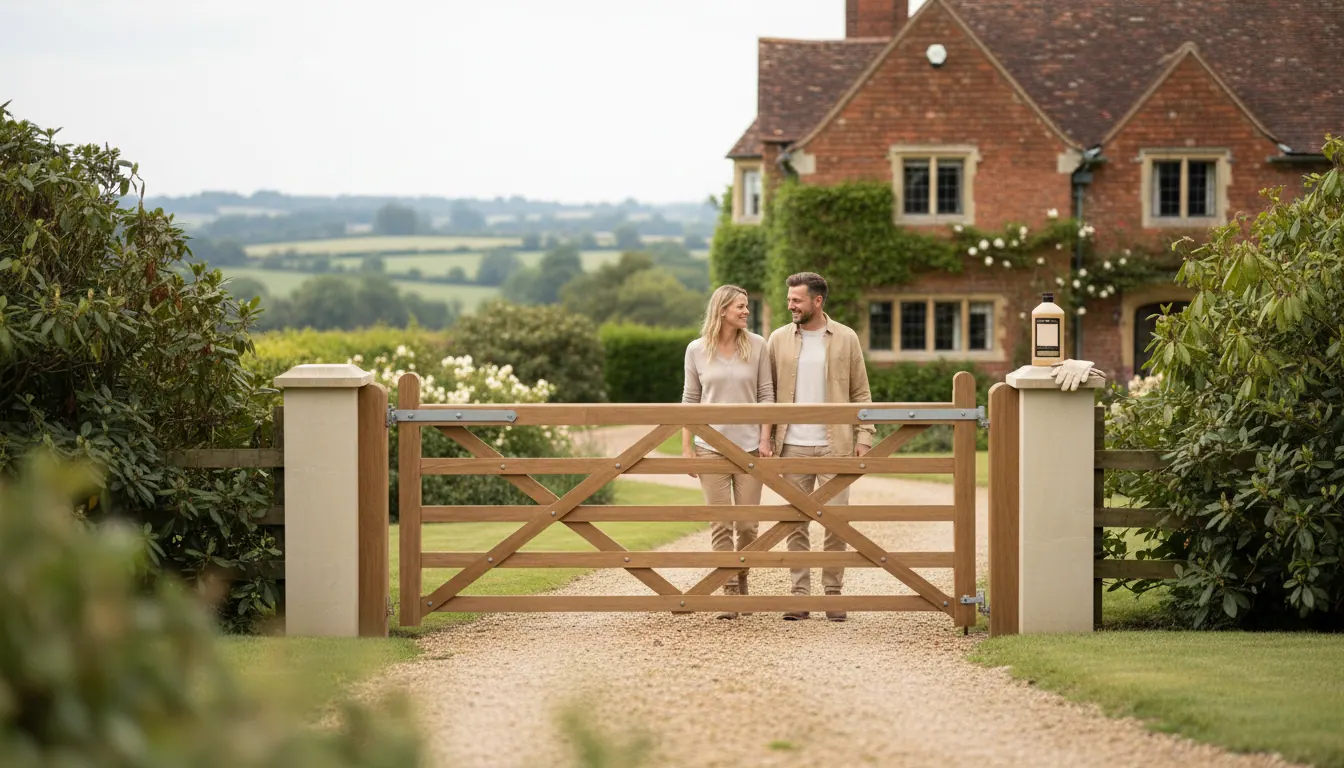
Timber Gates in Winsford & Northwich: Why Wooden Gates Warp & How to Prevent It
Practical timber gate maintenance advice for Winsford and Northwich homeowners. Keep your wooden gate looking great and working properly all year round.

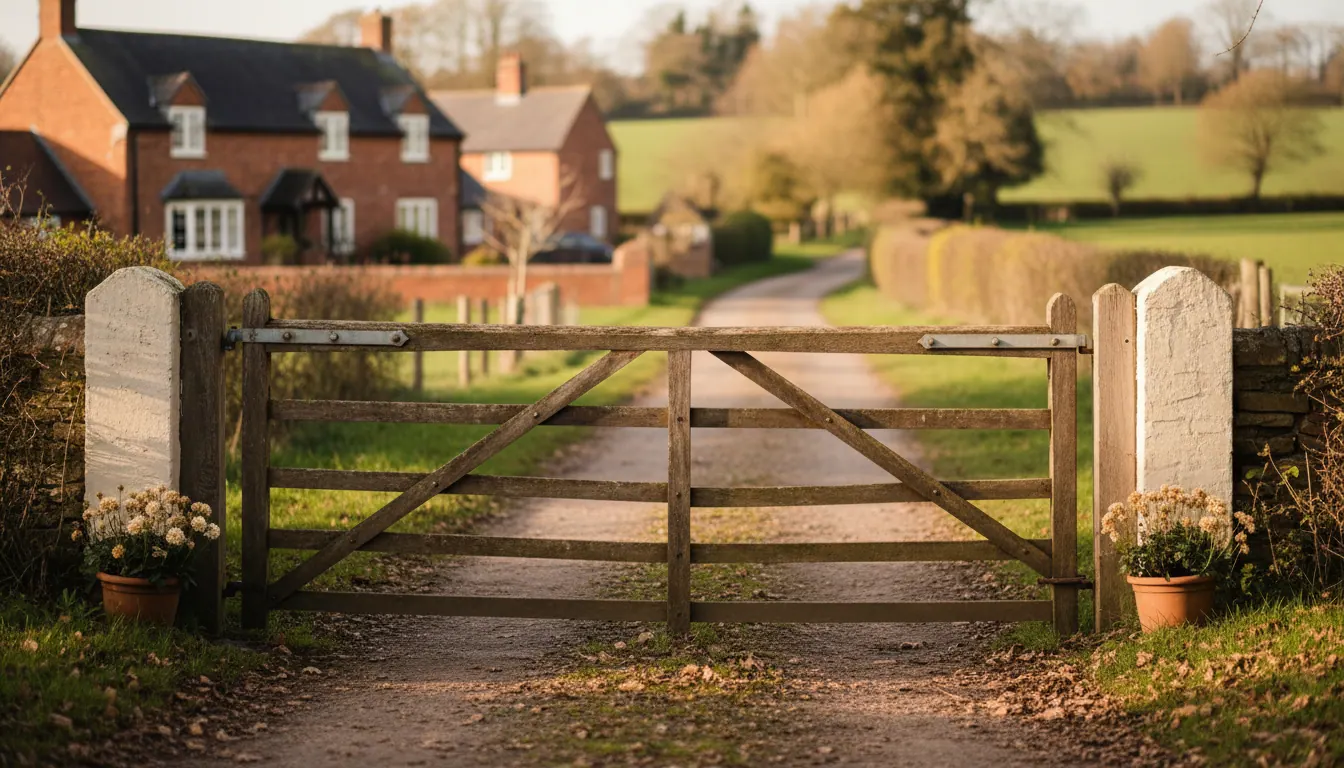
Why timber gate maintenance matters more than most people think
A well-made timber gate is one of the most satisfying things you can add to a Cheshire property. It frames the entrance, adds privacy and, done properly, lasts for many years. But timber is a natural material. It moves, it weathers, and without a bit of attention it will deteriorate faster than you expect.
We see it regularly across Winsford, Northwich and the surrounding villages. A gate is fitted, looks great for a couple of seasons, then starts to drop, swell, split or peel. Usually that happens not because the gate was badly made, but because it was never maintained. A few hours of simple work each year can add a decade to a timber gate's life.
This article covers what to do, when to do it and what to watch for.
How Cheshire weather affects timber gates
Cheshire winters are wet. The ground stays damp for months, temperatures swing between mild and frosty, and timber absorbs moisture and then dries out repeatedly. That cycle of expansion and contraction is the main reason gates fail.
A gate that sits perfectly in its frame in summer may bind in winter once the timber has swollen. Conversely, a gate that swings freely in January may rattle and sit loose in a dry July. Neither is a fault in itself. It is just timber behaving as timber does. The goal of maintenance is to slow that cycle down and protect the wood so the movement stays within manageable limits.
Gardens in Hartford, Davenham, Sandiway and Weaverham often have heavier clay soil too. Clay holds water and stays wet long after rain has stopped, which means the base of gate posts and the lower rails of a gate are exposed to moisture for longer than they would be on a free-draining site. That makes the bottom section of a gate the first place to check.
The annual maintenance routine for timber gates in Winsford
You do not need a lot of equipment. A stiff brush, some fine-grit sandpaper, a cloth, your chosen timber treatment and a basic toolkit for the hardware. Set aside a dry day in early spring, once the worst of the winter weather has passed.
Check the structure first
Before you touch a brush or a tin, look at the gate properly.
- Open and close it several times. Does it move freely, or does it drag on the ground or bind in the frame?
- Look at the joints. Are any showing signs of opening up, or has the timber cracked along the grain?
- Check the bottom rail and any lower sections close to the ground. Press your thumb into the wood. If it feels soft or spongy, you may have early rot.
- Look at the posts. Do they feel solid, or is there any movement at the base?
If you spot soft timber at this stage, it is worth getting it looked at before you spend time treating the rest of the gate. Applying preservative over wood that is already rotting from the inside is a short-term fix at best.
Clean the surface
Dirt, algae and old flaking finish all need to come off before you apply anything new. A stiff brush works well for general grime. For algae or green growth (common on gates that face north or sit in shade), a diluted timber cleaner will shift it without damaging the wood.
Once clean, let the gate dry completely. Applying treatment to damp timber traps moisture inside and can cause more problems than it solves.
Sand back any rough or flaking areas
You do not need to strip the gate back to bare wood every year. But anywhere the existing finish is peeling, flaking or lifting, sand it back until you have a sound surface. Feather the edges so there is no sharp step between treated and bare timber.
Apply your timber treatment
The choice of treatment depends on the existing finish and your preference.
- Penetrating oil or preservative soaks into the timber rather than sitting on the surface. It is forgiving to apply, easy to top up each year and works well on sawn or rough-sawn timber.
- Exterior wood stain adds colour as well as protection. It sits slightly on the surface and will need more preparation if it starts to peel, but it gives a clean, finished look.
- Paint gives the most solid finish but requires the most preparation and the most ongoing maintenance. Any water that gets under painted timber is harder to detect and can cause hidden rot.
Whatever you use, follow the manufacturer's guidance on the number of coats and drying time between coats. One well-applied coat is worth more than two rushed ones.
Check and lubricate the hardware
Hinges, bolts, latches and drop bolts all need attention.
- Wipe off any surface rust with a cloth or fine wire wool.
- Apply a light lubricant to moving parts. This keeps them operating smoothly and slows corrosion.
- Check that all fixings are tight. Loose hinge screws are one of the most common reasons a gate starts to drop. If screws have worked loose and the holes are stripped, they need to be repaired properly rather than just tightened. Wooden plugs or longer replacement screws can usually fix it.
For more on why gates drop and how to address it, our article on dropped gates and sagging hinges in Northwich and Weaverham covers the mechanics in detail.
Mid-season checks
The annual spring routine is the main event, but a quick look in late autumn is worth doing too.
Before winter sets in, check that any drainage around the gate posts is clear. Leaves and debris can build up and hold water against the base of the post. Clear it away, and if there are any minor splits or checks in the timber that have opened up over summer, a dab of exterior wood filler or sealant will stop water sitting in them over winter.
If your gate has a diagonal brace (the diagonal timber that runs across the frame to stop it racking), check it is still properly fixed at both ends. A loose brace means the gate will start to go out of square over time.
What a customer said about our work
This review from Lisa Brookes sums up what we aim for on every job:
Polite very reliable and very good at what he does without stupid prices
That is exactly the kind of work we want to deliver, whether it is a new gate, a repair or a maintenance visit.
When maintenance is not enough: repair or replacement
Even with good maintenance, there comes a point where a gate needs more than a coat of treatment.
Signs that repair is needed:
- A lower rail or stile that has gone soft with rot
- Joints that have opened up and no longer hold their shape
- Posts that have moved or rotted at the base
Sometimes a repair is straightforward. A single rotten rail can be replaced without remaking the whole gate. A post that has failed at the base can be replaced without touching the gate itself. We always look at whether a repair makes sense before recommending a full replacement, because often it does.
If you are at the point of replacing a gate entirely, it is worth thinking about the specification. Hardwood will outlast softwood significantly, particularly for the lower sections and the posts. Mortise-and-tenon joints hold better over time than screwed or nailed construction. And a gate that is made to fit your opening precisely, rather than cut down from a standard size, will always sit and swing better.
Our article on timber gates versus metal looks at the wider question of material choice if you are weighing up options.
Frequently asked questions
How often should I treat a timber gate in Winsford?
Once a year is a good baseline for most gates. If your gate faces south and gets a lot of direct sun, the finish will break down faster and may benefit from treatment every nine months or so. If it is in a sheltered, shaded spot, every twelve to eighteen months may be sufficient. The key is to treat it before the existing finish has fully broken down, not after.
My gate swells in winter and sticks in the frame. What should I do?
A small amount of seasonal movement is normal. If the gate is genuinely binding, the usual causes are either that it was hung with too tight a fit originally, or that moisture is getting in through an unprotected edge (often the top or bottom rail, which are easy to miss when treating). Planing a small amount off the binding edge and then sealing all surfaces, including the end grain, usually solves it.
Can I maintain a timber gate myself, or do I need a joiner?
The annual treatment routine is well within most homeowners' capabilities. Cleaning, sanding and applying preservative does not require specialist skills. Where a joiner is useful is when there is structural work involved: replacing a rotten rail, repairing a joint, re-hanging a gate that has dropped, or replacing a post. Those jobs benefit from the right tools and experience to do properly.
How long should a well-maintained timber gate last in Cheshire?
A hardwood gate that is properly maintained can last thirty years or more. Softwood gates, maintained consistently, should give fifteen to twenty years of good service. The posts are often the weak point: even with good maintenance, a softwood post set in the ground has a finite life. Using a concrete spur or a steel post socket to keep timber out of direct ground contact makes a significant difference.
If your gate needs attention, whether that is a repair, a re-hang or a brand-new bespoke gate made to fit your entrance, get in touch with us and we will come and take a look.